
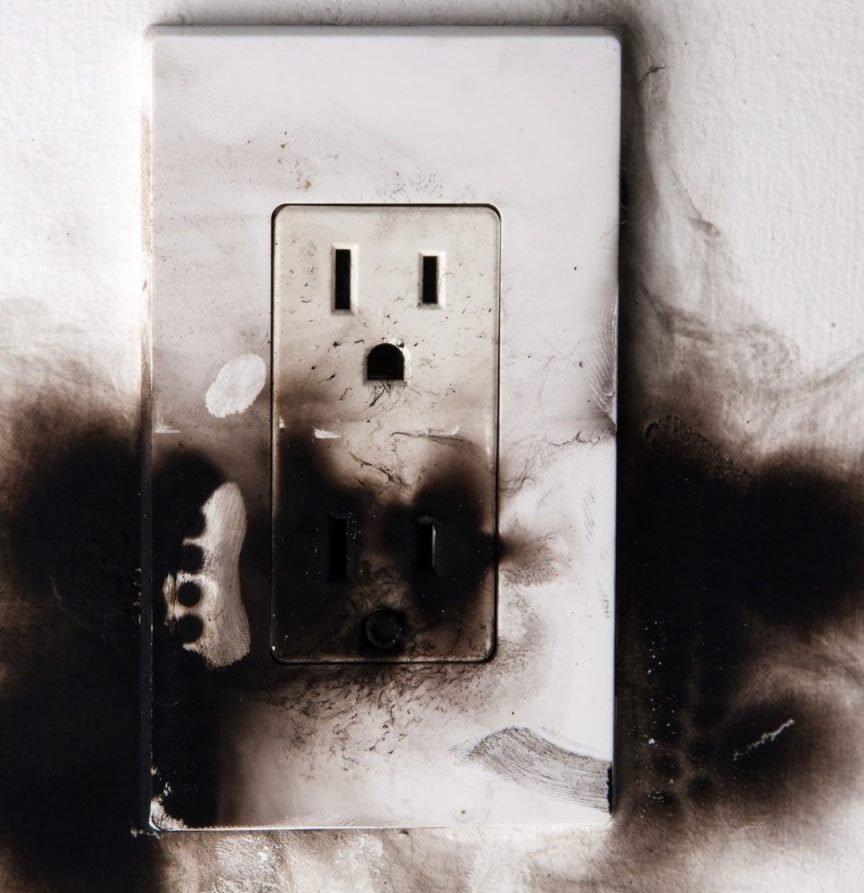
What if one of the biggest fire risks in your home is hiding behind your walls? Each year, the United States sees between 24,000 and 51,000 electrical fires. Understanding what causes these fires is the first step toward protecting your home and family.

Common Causes
Electrical fires can often be prevented by recognizing common hazards around your home. One of the leading causes is faulty outlets and damaged appliances. Never use an appliance with a worn or frayed power cord, as damaged wiring can generate heat that ignites nearby combustible materials such as carpets, curtains, or rugs. Light fixtures can also pose a fire risk if the wrong light bulb is used. Always follow the manufacturer’s recommended bulb wattage, since bulbs with a higher wattage than the fixture is designed for can overheat and start a fire.
Extension cords are another common source of electrical hazards. They should only be used as a temporary solution and should never be used to power large appliances, as they are not designed to handle the high electrical load. If you find yourself relying on extension cords regularly, it’s a good idea to hire a licensed electrician to install additional outlets where they’re needed. Space heaters also require extra caution. Keep them at least three feet away from flammable materials such as furniture, blankets, and curtains, and always plug them directly into a wall outlet rather than an extension cord. Finally, outdated or damaged wiring can significantly increase the risk of an electrical fire. If your home has flickering lights, frequently tripped breakers, or warm outlets, have your electrical system inspected by a qualified electrician to ensure it is safe and up to code.

How to Prevent Electrical Fires
- Have all electrical work completed by a qualified electrician to ensure repairs and installations are performed safely and meet electrical codes.
- Do not overload outlets; too many devices plugged into one outlet can cause overheating and increase the risk of fire.
- Replace wall outlets if plugs do not fit snugly.
- Install tamper-resistant electrical outlets if you have young children to help prevent accidental contact with electrical components.
- Use power strips that include internal overload protection for added safety.
- Plug major appliances directly into a wall outlet. Using extension cords for large appliances can cause overheating and may lead to a fire.
- Unplug small appliances when they are not in use.
- Use light bulbs that match the recommended wattage for your lamps and fixtures to prevent overheating.
When to Call an Electrician
Knowing when to call an electrician can help prevent dangerous electrical issues before they become serious problems. If you notice any of the warning signs below, it is important to have your electrical system inspected by a qualified professional:
- Frequent blown fuses or tripped circuit breakers.
- A tingling sensation when touching an electrical appliance.
- Discolored, damaged, or warm wall outlets.
- A burning or rubbery smell coming from an appliance or outlet.
- Flickering or dimming lights throughout your home.
- Sparks coming from an outlet or electrical device.
Electrical problems should never be ignored. If you experience any of these warning signs, contact Owings Mechanical for professional electrical service and help keep your home safe.