
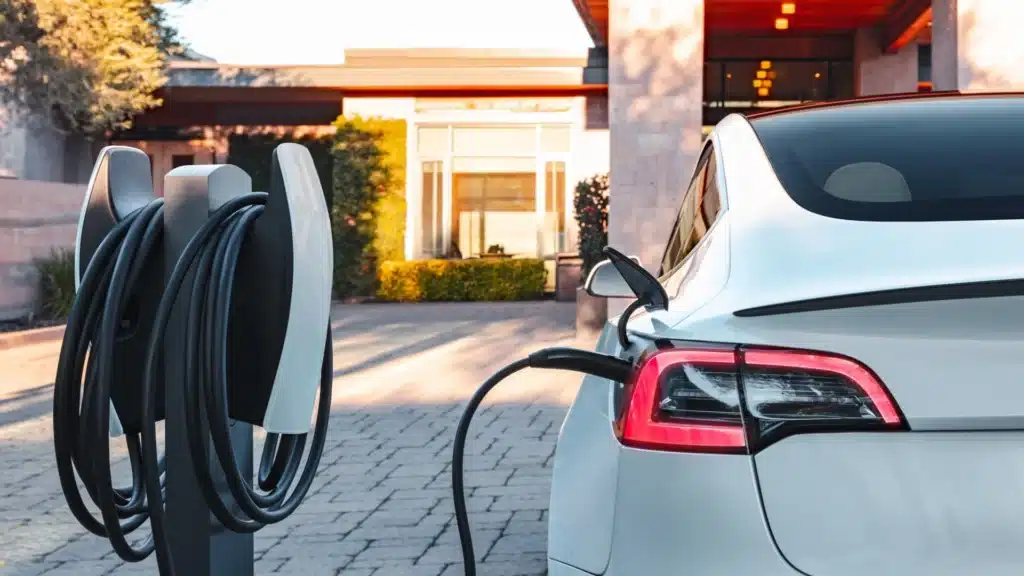
For convenient charging of your electric or hybrid vehicle, you can have an EV charging station installed at your home. EV owners prefer Level 2 chargers that connect to a 240-volt circuit, which provide up to 40 miles of charge per hour, depending on the kilowatt rating of the charger. The charging rate will also be governed by the vehicle’s ability to accept a charge. This is usually perfect for daily use. It is strongly recommended to employ a licensed electrician to complete the project to ensure that your station is installed safely and meets the National Electrical Code.

Key Points Before Installing
Consider these points before installing your EV Charging Station to ensure you have a smooth process:
- Location – A suitable location. If you have off-street parking, there should be a wall within 20 feet of the vehicle’s charging port.
- Power Supply – Is your existing electrical service capable of supporting the additional load of an EV charger?
- Installation Process- A licensed and insured electrician is recommended.
- Cost- Contact your local electrician for a quote and check for possible tax credits that can greatly offset the cost.
When you install a Level 2 charging station, you can plug in at night and wake up to a fully charged car. It is important to hire a competent, experienced electrician who knows the code and can ensure the safe installation of the station.

Features to Consider
Make sure you find a location for the charger that gives you the most flexibility. You’ll also need to make sure you have a long enough cable. Residential chargers typically have a cord between 15 and 25 feet long. You may want to locate the charger so that the cord is long enough to reach a car in either spot in a two-car garage, or to also be able to charge if the car is on the outside. The logistics of where the electric circuit must come from can affect the location as well. Your electrician should visit your home and work with you for a plan that serves you best.
Be SURE to choose a UL or ETL-listed charger. These trusted safety organizations have extensively tested the products, offering assurance that your charger meets industry standards. Some of the less expensive home charging stations may forgo these certifications, and a poorly constructed charger could create a house fire.
The station’s power is measured in kilowatts, and this determines how fast the car can charge. The recommended rating is no less than 7.2kw, which produces approximately a 25 miles per hour charge rate. An upgraded option for a residential charger is 9.6kw, which would provide up to 34 miles per charge. Not unlike gasoline-powered vehicles, the number of miles you can run per hour of charge varies depending on the vehicle. For example, a midsize SUV would be around 29 miles per hour of charge, while a larger vehicle, such as a truck, may only go 18 miles per hour of charge.
Discuss your needs and the amount you wish to spend with your local electrician to determine the best option for your home charging station. The higher the kilowatt rating, the more expensive the installation will be, so this must be considered in your decision.
Lastly, consider whether you wish to hardwire the EV charger or install a 240-volt plug. This is an option of installing an outlet that will allow you to use a mobile EV charger that you can plug in and unplug to take with you wherever you go. This outlet must be designed and rated for the high-load demand of an EV charger. The advantage of this installation is that once the receptacle is installed, an electrician would not be needed if the charger is replaced, or removed in the case of selling the residence, etc. The disadvantage to this type of installation is that it can complicate the installation/inspection process, with GFCI protection being required by code but discouraged by charger manufacturers.
Our recommendation is to work with a licensed electrician to install a hard-wired EV charger to ensure that you comply with all safety standards and electrical codes and reduce the fire hazard.

You may be eligible for a rebate for installing your EV Charging Station. Check out the Maryland Energy Administration Electric Vehicle Equipment Rebate Program to see if this rebate applies to you!